Clark County Clerk of Court manages court filings, records, and essential administrative duties for the county’s legal system. This office ensures that civil, criminal, and probate cases are properly documented and accessible to the public. Citizens, attorneys, and local agencies rely on the Clerk of Court to provide accurate information and maintain official legal records. By handling filings efficiently and issuing certifications, the office supports smooth court operations. Its role is critical for anyone involved in legal proceedings or needing verified court documents.
The Clark County Clerk of Court also oversees court administration and works closely with judges and staff to maintain organized case schedules. The office manages dockets, ensures records are up-to-date, and provides certified copies of judgments and orders when requested. Maintaining transparency and reliability is a key part of its responsibilities. From filing important legal documents to supporting the county’s judicial processes, the Clerk of Court remains a central hub for legal administration and public service in Clark County.
What is the Clark County Clerk of Court
The Clark County Clerk of Court is the official office responsible for handling legal filings, maintaining court records, and managing administrative duties for the county’s judicial system. It ensures that civil, criminal, family, and probate cases are documented accurately and processed efficiently. By maintaining clear records and managing filings, the office supports judges, attorneys, and the public, keeping the court system organized and reliable.
The Clark County Clerk of Court Services cover all aspects of legal documentation, from case filings to certified copies of judgments and orders. The office ensures that legal processes at the Clark County Court proceed without delays while preserving the integrity of court records. Residents, attorneys, and government agencies rely on the Clerk’s office for verified documents and timely administrative support, making it a cornerstone of local judicial operations.
Organizational Structure of the Clerk’s Office
The Clark County Clerk of Court is structured to handle a wide range of administrative and legal tasks efficiently. The office includes the Clerk of Court, deputy clerks, administrative staff, and record specialists, each focusing on specific responsibilities to keep court operations running smoothly.
Key Roles in the Office:
- Clerk of Court: Oversees all operations, approves filings, and ensures compliance with regulations.
- Deputy Clerks: Assist with daily filings, customer inquiries, and document certifications.
- Administrative Staff: Manage hearing schedules, notifications, and office coordination.
- Records Specialists: Maintain accurate case files and ensure proper organization of court records.
Roles and Responsibilities
The Clark County Clerk of Court performs vital functions that are distinct from judges or other court personnel. While judges make legal rulings and courtroom staff assist with hearings, the Clerk’s office focuses on administrative and record-keeping tasks essential for smooth court operations.
Primary Responsibilities Include:
- Court Administration: Managing case dockets, coordinating hearings, and supporting judges.
- Record Keeping: Maintaining complete and accurate files for civil, criminal, family, and probate cases.
- Legal Filings: Accepting complaints, motions, and other documents from attorneys and the public.
- Document Services: Issuing certified copies, certificates, and official records as needed.
Importance of Accurate Record Maintenance
Maintaining precise court records is one of the most important functions of the Clark County Clerk of Court. Proper documentation safeguards legal rights, supports case verification, and provides essential evidence in disputes or appeals. By carefully managing documents and records, the office strengthens public trust and helps the judicial system operate effectively.
Benefits of Accurate Record Maintenance:
- Ensures smooth judicial processes without delays.
- Provides verified evidence for legal disputes and appeals.
- Supports attorneys, judges, and government agencies with reliable case information.
- Preserves historical records for civil, criminal, family, and probate matters.
How to Search for Court Records
Searching for court records lookup through Clark County Clerk of Court Services lets users find official case files, dockets, and other documents related to legal proceedings. Clark County’s Clerk of the Court maintains records from historic to current cases, and many of these can be viewed online or in person.
Official Online Search Portal
The best place to begin a free online search for court records is the Clark County Courts’ official site, which provides public access to many cases.
Official Website: https://www.clarkcountycourts.us/departments/clerk
Open the Official Court Records Page
- Enter the official URL: https://www.clarkcountycourts.us/departments/clerk/ in your browser.
- On that page, look for links or buttons that say “Records Search,” “Case Inquiry,” “Court Records,” or “Case Finder.” This will direct you to the search system.
Choose the Case Type
- Once the search tool loads, you can often choose what type of record you are searching for:
- Civil Cases (lawsuits, property disputes)
- Criminal Cases (charges, citations)
- Family Matters (divorce, custody — note some are restricted)
- Probate & Guardianship Cases
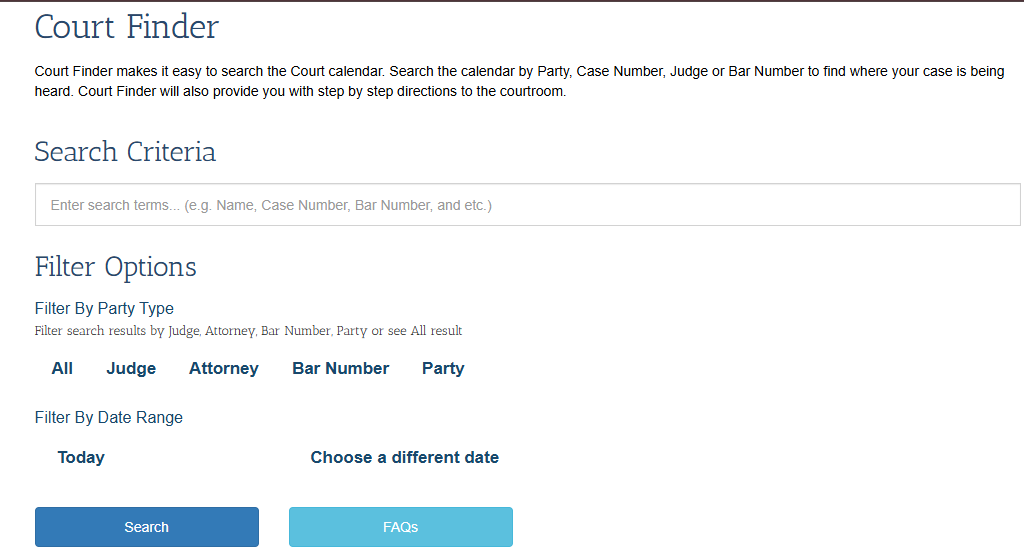
Enter Search Criteria
- Fill in at least one of the fields such as:
- Case Number (if you already have it)
- First and Last Name of a party involved
- Attorney Name or Bar ID (optional advanced search)
Use Filters
- Use any available filters to narrow results by:
- Date range (year filed to recent)
- Case type or court division
- Party role (plaintiff/defendant)
Review & Select Cases
- After submitting the search, a list of matching cases will display.
- Click the case number or link to see details such as hearings, filings, or docket summaries.
Save or Print Records
- Many portals let you print or save a PDF of records. If certified copies are needed, follow instructions to request them through the court office (often a fee applies).
Current Clark County Clerk of Court
The Clark County Clerk of Court in Nevada is Lynn Marie Goya, the elected official responsible for managing court records, overseeing filings, and supporting the county’s judicial processes. She has held this office since January 2015 and has led efforts to make the clerk’s office more accessible and efficient. Residents, attorneys, and government agencies rely on her leadership to ensure court operations run smoothly and public records remain accurate.
Lynn Goya combines experience in journalism and public service with a strong commitment to transparency and community engagement. She earned a bachelor’s degree from San Diego State University and has been re-elected multiple times, demonstrating trust from the community. Her professional background helps her communicate effectively with the public while modernizing services in the clerk office.
Biography and Qualifications
Goya’s career prior to the Clark County Clerk of Court included freelance journalism covering regional and national news. She brings valuable skills in research, documentation, and public communication to her role. Her educational background and experience in civic engagement provide a strong foundation for leading the clerk office.
Key Qualifications:
- Bachelor’s degree from San Diego State University
- Over a decade of experience in public service and communication
- Elected multiple times to the Clark County Clerk position
Role in the Community
As Clark County Clerk of Court, Goya plays an active role in community affairs beyond managing legal filings. She is involved in initiatives to improve public access to records, streamline processes, and ensure residents can efficiently interact with the clerk office.
Community Contributions:
- Modernizing online and in-person court record services
- Expanding office hours and branch locations for better public access
- Participating in boards such as the Clark County Board of Commissioners
Achievements and Initiatives
Under Goya’s leadership, the clerk office has introduced several programs to enhance efficiency and public convenience. She has implemented digital filing systems, improved online case searches, and ensured passport acceptance services are more widely available.
Notable Achievements:
- Streamlined online public record access and case search tools
- Introduced modernized electronic filing systems for attorneys and residents
- Expanded branch offices to reduce wait times and improve service delivery
Responsibilities of the Clerk of Court
The Clark County Clerk of Court plays a vital role in maintaining the county’s judicial system. The office ensures that court activities are properly documented, organized, and accessible to the public. From managing court filings to certifying documents and supporting judges, the clerk’s responsibilities help keep legal processes efficient, transparent, and compliant with Nevada law.
The clerk’s office serves as the administrative backbone for all court operations. It manages records for civil, criminal, family, and probate cases, while assisting courtroom staff with schedules and dockets. By providing accurate and timely information, the clerk ensures the public, attorneys, and judges can trust the integrity of official documents and proceedings.
Maintaining Official Records and Court Filings
A core duty of the Clerk of Court is managing court records and filings. This includes organizing, storing, and updating case documents to ensure they are complete and secure. Proper maintenance allows the court system to operate smoothly and helps users quickly locate necessary information.
Key Tasks:
- Organize complaints, motions, judgments, and dockets
- Maintain both electronic and physical case files
- Track updates and changes for active and closed cases
- Ensure easy retrieval for attorneys, judges, and public requests
Document Certification and Notarization
The clerk office also handles certification and notarization of documents, ensuring that legal papers are official and valid. These services are often requested by attorneys, businesses, and members of the public needing certified court documents for legal or administrative purposes.
Services Provided:
- Issuing certified copies of judgments and orders
- Notarizing required legal documents
- Verifying authenticity of court records for external use
- Assisting with public requests for certified copies
Court Administration Support
Supporting court administration is another critical responsibility of the clerk office. This includes scheduling hearings, managing case dockets, and assisting judges and court staff with daily operations. By coordinating courtroom activities, the clerk ensures cases progress efficiently and reduces delays.
Administrative Duties:
- Scheduling hearings and trials
- Maintaining case dockets and tracking deadlines
- Coordinating courtroom operations and notifications
- Assisting judges and staff with procedural tasks
Public Access and Transparency
The Clerk of Court also safeguards public access to records, balancing transparency with privacy. Residents, attorneys, and government agencies can view public records online or in person, while restricted cases like juvenile or sealed family matters are protected.
Public Access Duties:
- Providing access to civil, criminal, and probate case files
- Issuing certified copies on request
- Educating the public about record availability and restrictions
- Maintaining a clear system for online and in-person searches
Legal Compliance
Finally, the clerk office ensures legal compliance in all filings and document handling. This responsibility guarantees that court procedures follow Nevada state law and regulations. Compliance safeguards the integrity of the judicial system and protects the rights of all parties involved.
Compliance Responsibilities:
- Verifying filings meet statutory requirements
- Maintaining accurate documentation for audits or legal review
- Ensuring proper procedures for restricted or confidential cases
- Supporting fair and lawful court administration
Types of Court Records & Services
The Clark County Clerk of Court manages a wide range of court records and provides critical services to residents, attorneys, and government agencies. These records are used to verify case details, track proceedings, and obtain official or certified copies for legal, administrative, or personal purposes. Accessing the correct records requires understanding the types maintained and the services offered by the clerk’s office. The office organizes records by case type, maintains both current and archived files, and offers support for filing, certification, and retrieval. With online and in-person options, the Clark County Clerk ensures convenience, transparency, and compliance with Nevada law for all users.
Types of Records
The clerk office maintains several types of records, each with a unique purpose and level of accessibility. Records are organized to allow residents, legal professionals, and agencies to locate documents efficiently. Public records include civil, criminal, family, probate, and traffic cases, while dockets and judgments summarize the progress and outcomes of these cases.
Civil Cases
Civil court records include lawsuits, property disputes, contracts, and small claims. They provide a complete history of filings, motions, and judgments related to non-criminal legal matters. These records are essential for parties involved in disputes as well as attorneys handling ongoing or past cases.
Examples of Civil Records:
- Complaints, petitions, and motions
- Court orders and dockets
- Judgments and settlements
Criminal Cases
Criminal records cover arrests, charges, plea agreements, trials, and sentencing information. These documents help attorneys, law enforcement, and the public verify case details and confirm legal compliance. Accurate criminal records are critical for ongoing investigations, appeals, and background verification.
Examples of Criminal Records:
- Arrest records and charges
- Court proceedings and docket entries
- Sentencing and judgments
Family Cases
Family court records address matters such as divorce, child custody, support, adoption, and guardianship. Marriage and Divorce Records may also be included. Some family records may be restricted to protect the privacy of minors or other sensitive parties. These records provide legal proof of decisions affecting family rights and responsibilities.
Examples of Family Records:
- Divorce filings and decrees
- Custody and support agreements
- Adoption and guardianship documents
Probate Cases
Probate records deal with wills, estates, and guardianships. They document legal decisions regarding property distribution and administration of estates. These records are often requested by heirs, attorneys, and government agencies to verify the legal handling of estates.
Examples of Probate Records:
- Wills and letters of administration
- Estate inventories
- Guardianship records
Traffic Cases
Traffic records include citations, infractions, and related court proceedings. They are used to confirm payment, verify court appearances, or assess penalties. Traffic records are commonly requested by drivers, insurance companies, and legal representatives.
Examples of Traffic Records:
- Citations and summons
- Court resolutions and fines
- Payment and compliance records
Court Dockets and Judgments
Dockets provide a chronological record of all proceedings in a case, while judgments summarize the final decisions made by the court. Both are essential for verifying case outcomes and maintaining accurate historical records.
Certified vs. Unofficial Copies
- Certified Copies: Official, sealed documents valid for legal or administrative purposes.
- Unofficial Copies: For reference only, not valid in official proceedings.
Archived Records
Older or closed records may be stored offline in archives. Requests for archived files can be made in person or by mail. The clerk office ensures these records are cataloged, secure, and retrievable when needed.
Services
The Clark County Clerk of Court Services support filing, certification, and retrieval of records. Both online and in-person services are available to make interactions with the clerk’s office efficient and compliant with Nevada law.
Filing Court Documents
The clerk office accepts filings for new cases, motions, responses, and other documents. Proper filing ensures cases proceed on schedule, meet legal requirements, and are accurately documented for public records.
Filing Services Include:
- Civil, criminal, family, probate, and traffic filings
- Electronic submissions through the online portal
- In-person filings at the Regional Justice Center
Requesting Certified Copies
Certified copies are official court documents needed for legal, administrative, or personal purposes. They are issued with a seal and can be notarized when necessary. Fees may apply.
Certified Copy Services:
- Issuance of official judgments, orders, and dockets
- Notarization as required
- Mail or in-person pickup options
Searching and Retrieving Records
Users can search records through the online portal or in-person public terminals. Filters like case type, party name, or date range make searches more efficient. If online access is unavailable, archived records can be requested in person.
Search Tips:
- Use full names and correct spellings
- Filter by case type and date range
- Request archived records if not found online
Online vs. In-Person Services
- Online: View dockets, download unofficial copies, request certified documents https://www.clarkcountycourts.us/departments/clerk
- In-Person: File documents, access public terminals, obtain certified copies, and receive staff assistance
Steps for Court Filings
Filing legal documents with the Clark County court office is an important responsibility for anyone involved in a legal matter. Correct preparation and submission ensure your case is officially recognized, recorded, and processed by the court system. This step‑by‑step guide covers preparing documents, fees and payments, submission methods, processing times, and follow‑up, so you can file without confusion. The Clark County Clerk of Court accepts filings for civil, criminal, family, probate, and traffic cases. You can file documents either online or in person, and fees vary depending on what you are filing. Knowing what is required, what it costs, and how to follow up will smooth the filing process and help avoid rejections.
Preparing Documents and Forms
Before submitting anything, carefully prepare your paperwork. You need the correct forms for your case type and all supporting documents that apply. Each form must be filled out neatly and completely, signed where required, and accompanied by attachments if needed. Missing information is a common reason filings are rejected or delayed.
Preparation Checklist:
- Choose the right form for your situation (civil, criminal, family, traffic, probate).
- Fill in all required fields clearly and accurately.
- Sign and date all necessary sections.
- Include supporting exhibits and attachments in the correct order.
- Make copies of everything for your personal record before submission.
Fees and Payment Methods
Most filings require a fee, and Clark County sets these under state or county rules. In addition to court filing fees, there are costs for certified copies and record searches. Having correct payment ready at the time of filing is essential. Fees may change, so confirm them before filing.
Common Filing and Document Fees:
- Record Search (per name): $0.50 per search.
- Uncertified Copy (per page): $0.50 per page.
- Certified Copy (per page): $6.00 per page.
Payment Methods:
- Cash (in person)
- Credit/Debit card (may include processing fee)
- Money order or cashier’s check (if mailed)
Submission: Online vs In‑Person
The Clark County court office supports both online and in‑person filing options. Choose the method that works best for your situation. Online filing is convenient and gives immediate confirmation, while in‑person filing allows you to speak directly with clerk staff for assistance.
Online Filing Steps:
- Visit the official Clark County courts portal for e‑filing.
- Upload your completed forms and attachments.
- Enter required case or party information.
- Pay the filing fee electronically.
- Save the confirmation receipt for your records.
In‑Person Filing Steps:
- Bring your prepared documents to the clerk office at the Regional Justice Center.
- Give your paperwork to the clerk at the filing counter.
- Pay the filing fee in person.
- Ask for a receipt or stamped copy as proof of filing.
Processing Times and Follow‑Up
After filing, the clerk office checks your documents for completeness. Processing times depend on case type and office workload. If your filing is incomplete or requires corrections, you may receive a notice to fix the issues before it can be accepted. Tracking and follow‑up are important.
Follow‑Up Tips:
- Track your case using the online case portal with your case number.
- Check email or mail for notices about required corrections.
- Contact the clerk office if your filing status doesn’t update within expected time.
- Keep copies of all documents, receipts, and confirmations.
- Note deadlines for related hearings, responses, or future filings.
Document Certification & Notarization
The Clark County Clerk of Court services include document certification and notarization, which provide official validation for copies of legal records and other important documents. Certified documents are used in court proceedings, government processes, property transactions, and personal matters to prove authenticity. Understanding the types of documents that can be certified, the certification process, associated fees, and turnaround time ensures that requests are completed efficiently and correctly.
Types of Documents That Can Be Certified
The clerk office can certify a variety of documents, depending on what is recorded and maintained in the official court or vital records files. Certification confirms that a copy is a true and accurate reproduction of the original document held by the clerk, which makes it legally valid for official use.
Common types include:
- Judgments and court filings — for use in other courts or agencies
- Marriage certificates — proof of marriage for legal, administrative, or travel purposes
- Probate and estate documents — used for trusts, inheritance, or financial matters
- Certified abstracts — summaries of records requested for specific purposes
Certification Process
Requesting a certified copy requires identifying the document and providing enough information for the clerk to locate it, such as the case number, party names, or date of filing. Certification can be requested online or in person at the clerk office.
Steps to certify a document:
- Verify that the original document exists in the clerk’s records
- Complete the certification request form (online or in-person)
- Pay the required fee for certification
- The clerk attaches an official seal and signature to the copy
- Receive the certified copy either immediately or after processing
Fees and Turnaround
Clark County charges specific fees for document certification, which may vary by type of record or number of pages. Knowing the costs helps avoid delays and ensures proper payment is submitted with your request.
Typical fees include:
- Certified copy of a court document: $6.00 per page
- Certified marriage certificate: $20.00 each
- Uncertified copies: $0.50 per page
Turnaround:
- Same-day processing if the document is readily available
- A few business days for archived or hard-to-locate documents
- Online requests may include mailing time
Accessing Clerk Services & Contact Information
The Clark County Clerk of Court is the official office that maintains court records dating back to 1909 and supports the public in performing court records lookup and public records access. This office is a key resource for retrieving civil, criminal, family, probate, and traffic case information. Most records from 1990 to the present are searchable online, while older records can be accessed in person or by mail through the records division.
Contacts and office locations are essential for anyone who needs direct assistance or wants to access records that aren’t available online. The clerk office provides support both at the courthouse and via official telephone lines, helping users file documents, request copies, or confirm filing details. Hours and services are aligned with standard court operations to serve residents, attorneys, and agencies effectively.
Main Office Location & Contact Details
The primary location for the Clark County Clerk of Court is at the Regional Justice Center in Las Vegas, where the records counter and staff assist with public inquiries and record requests. Staff can help look up case information, guide document retrieval, and explain filing requirements.
Clerk Office Contact Information:
- Regional Justice Center – 200 Lewis Avenue, 3rd Floor, Las Vegas, NV 89101 (Records Counter)
- Phone: (702) 455‑2590 (main clerk line)
- Fax: (775) 702‑474‑2434 (Family Court & Services Center)
- Hours: Monday – Friday: 9:00 AM – 4:00 PM (closed weekends and court holidays)
Online Service Portals
Many services are available online so users can search or retrieve records without visiting in person. The official court records portal allows searches by case number, party name, or attorney information. This online system is useful for viewing dockets, filings, and public case details — especially for cases from 1990 onward.
Key Online Resources:
- Official Clerk of Court Site: https://www.clarkcountycourts.us/departments/clerk/ — access public records, search tools, and forms.
- Case Search Tools: Many court case search functions are integrated on the official portal to help users find records quickly.
Frequently Asked Questions
The Clark County Clerk of Court provides public access to a wide range of court records and services. Many residents, attorneys, and businesses rely on the office for filing documents, requesting certified copies, and checking case information. This FAQ section answers the most common questions about court records lookup, filing procedures, fees, and access rules, helping users interact with the clerk office efficiently.
What can I file at the clerk’s office?
The Clark County Clerk of Court accepts filings for civil, criminal, family, probate, and traffic cases. Users can submit complaints, petitions, motions, judgments, and other legal forms required for ongoing court proceedings. Filing can be completed online via the official portal or in person at the clerk’s office. Proper preparation, including completed forms and any supporting documents, ensures that your filing is accepted and processed efficiently.
How do I request certified records?
Certified copies are official documents bearing the clerk’s seal and signature, verifying authenticity. To request them, identify the document by case number, party names, or filing date, then submit a request online or in person. Fees apply depending on the type of document, and some records may require a few business days if they are archived. Certified copies are often needed for legal, administrative, or personal purposes such as property transactions, court proceedings, or passport applications.
Are records available online?
Yes, many court records are accessible through the Clark County Clerk of Court online portal. Records from 1990 onward are searchable by case number, party name, or attorney. Users can view case details, court dockets, and some filings online. While most recent records are available electronically, older or archived records may require an in-person visit or formal request to the clerk office. Using the online portal saves time and provides immediate access to public information.
What are the fees?
Fees vary depending on the type of filing or certified document requested. Typical costs include: $6 per page for certified court documents, $20 for certified marriage certificates, and $0.50 per page for uncertified copies. Filing fees for civil, criminal, family, probate, or traffic documents also vary according to the case type. Payments can usually be made in person via cash, check, or credit card, and online submissions typically require a credit/debit card. Checking the official fee schedule before filing helps prevent delays.
How often are records updated?
The clerk office updates records regularly to maintain accuracy and compliance with Nevada law. Updates may include new filings, motions, judgments, or case closures. Online records are typically refreshed daily, allowing users to view the most recent activity. For archived or older records, updates may be slower, and users may need to request official copies for the latest verified information. Regular updates ensure that filings, court actions, and public information remain current and reliable.
Can I access records if I’m not a party?
Yes, most public court records are accessible to anyone, even if you are not a party in the case. Certain records, particularly in family or juvenile cases, may be restricted to protect privacy. The clerk office follows Nevada law to determine access levels. For public records, users can search online or request copies in person. When restricted records are involved, the office may require written authorization or legal standing to release the information.