Clark County Superior Court serves as a higher-level judicial authority that handles serious legal matters within the local court system. It plays a key role in reviewing major civil and criminal cases that need formal court review. This court stands above lower courts that manage limited disputes. As part of the Nevada courts structure, it helps maintain fairness and consistency. Many users search for this court to confirm its role in appeals and major filings. The court’s position gives it strong influence across Clark County.
Clark County Superior Court also matters due to its place in the court hierarchy. Lower courts handle traffic cases, small claims, and minor offenses. Higher-level courts, like this one, review those decisions and hear complex trials. Users often look here for appeal options, serious case oversight, and judicial authority. This court connects trial and appellate courts within the Nevada court system. Its function supports lawful decisions and keeps court actions aligned with state standards.
Court Hierarchy in Clark County
The Superior Court sits above local trial-level courts and reviews cases involving appeals or broader legal authority. Cases typically start in lower courts and move upward through a structured judicial system within Clark County Court.
How the Clark County Court System Is Structured
Clark County operates with a clear, layered judicial system that assigns cases based on complexity and legal authority. Each level has distinct responsibilities, ensuring minor matters don’t overwhelm higher courts. Lower courts handle smaller disputes, trial courts manage serious cases, and the Superior Court oversees appeals and complex legal issues.
At the base level, lower courts handle:
- Traffic violations
- Misdemeanors
- Small claims
- Preliminary felony matters
These courts focus on efficiency and local issues, allowing trial courts to concentrate on more significant legal matters. The system creates predictable pathways for both civil and criminal cases, helping the public understand where their case belongs.
How Cases Move Through the Hierarchy
Cases move upward in a structured flow that maintains fairness and clarity. After a decision at a lower court, parties may appeal if they believe legal errors occurred. Trial courts provide full hearings with evidence and witnesses, while the Superior Court reviews legal procedures without retrying facts.
Typical case progression includes:
- Start: Justice or municipal court for minor matters
- Next: Trial court for serious civil or criminal cases
- Review: Superior or appellate court examines legal correctness
- Final stage: State appellate courts review select rulings
What Is the Clark County Superior Court?
The Clark County Superior Court is the highest trial-level court in the county, handling serious civil and criminal cases. It oversees legal disputes that require broader authority than municipal or district courts can provide.
Jurisdiction and Authority
The Superior Court holds broad jurisdiction over both criminal and civil matters, giving it authority to hear complex and high-stakes cases. This includes felonies, family law disputes, probate cases, and large civil claims. Its decisions carry weight across Clark County, providing a legal framework that lower courts often follow.
Key responsibilities include:
- Conducting trials for serious criminal offenses
- Resolving major civil disputes, including property and contract cases
- Overseeing family law matters such as divorce and custody
- Handling probate, guardianship, and estate cases
How the Superior Court Differs From Other Courts
Unlike municipal or district courts, which handle minor offenses and small claims, the Clark County Superior Court reviews more significant legal matters. Municipal courts generally address traffic tickets, misdemeanors, and local ordinance violations. District or justice courts often hear preliminary felony hearings or smaller civil claims.
In contrast, the Superior Court:
- Handles complex trials that require full evidence and testimony
- Possesses authority to issue binding rulings across the county
- Conducts judicial review when cases are appealed from lower courts
- Ensures uniformity in legal interpretation within Clark County
Importance in Maintaining Legal Consistency
By reviewing and ruling on high-level cases, the Superior Court provides a standard for legal outcomes throughout Clark County. Its oversight helps prevent conflicting decisions among lower courts and strengthens public confidence in the judicial system. Judges in this court often serve as a benchmark for interpreting laws that impact the wider community, highlighting its role in legal oversight.
How to Search Clark County Superior Court Case Information
Clark County, Nevada Superior Court cases can be searched online using the official public access portal. Users may search by case number, party name, or apply filters such as case type and filing date.
Official Case Search Portal: https://cvpublicaccess.clarkcountynv.gov
Steps to Searching Court Cases
This section explains exactly where and how users can search for court cases filed in Clark County Superior Court. The official public access portal is the only reliable source for viewing case information online.
Open the Official Court Search Website
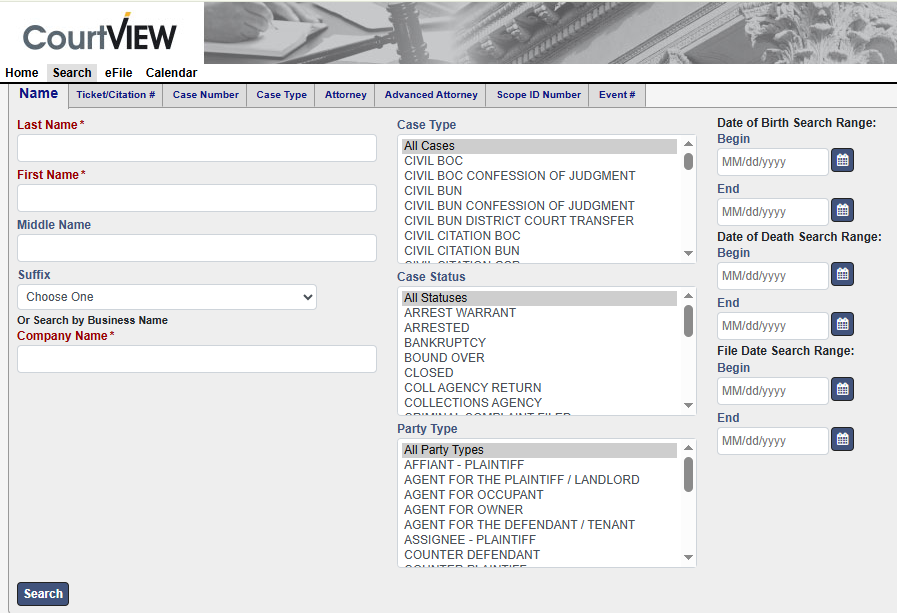
Users should begin by opening the official Clark County public access website in their browser. This portal is maintained by the Eighth Judicial District Court and provides public access to case records. Once the page loads, users will see a search form with multiple fields. These fields allow users to locate cases using different types of information, depending on what details they already have.
Choose the Appropriate Search Method
The search form allows users to look up cases using several options. Selecting the correct method improves accuracy and saves time.
Users can search using:
- Case Number for the most accurate results
- Last Name and First Name for individual cases
- Company Name for business-related cases
Apply Search Filters for Better Results
After entering basic information, users can refine their search by applying filters. These options help reduce the number of unrelated results and narrow down the case list.
Available filters include:
- Case Type such as civil, criminal, family, or probate
- Case Status including open or closed cases
- File Date Range to limit results by year or filing date
- Party Type such as plaintiff, defendant, or attorney
Review Case Search Results
Once the search is submitted, the system displays a list of matching cases. Each case number is clickable and opens a detailed case summary page.
From the results page, users can view:
- Case status and filing date
- Scheduled hearing dates
- Names of involved parties
- Basic case activity and history
Viewing Case Information vs. Obtaining Certified Records
The online search portal provides public case information only. It is useful for reference, case tracking, and general review, but it does not replace official court documents. Certified copies of court records are required for legal filings, verification, or official use. These records must be requested directly from the Clerk of the Court, and processing fees may apply.
Types of Cases Heard by the Superior Court
The Superior Court hears higher court cases that involve serious legal issues, large disputes, or formal review of earlier rulings. These cases usually move beyond local courts due to their scope, value, or legal impact. The Superior Court serves as a key forum for major cases that require broader court authority. Matters reaching this level often involve detailed legal arguments, extensive records, and decisions that influence how law is applied across the county. The sections below explain the main categories of cases handled at this level.
Civil Cases
Civil cases heard by the Superior Court usually involve high-value disputes or legally complex claims. These matters often exceed the limits of municipal or district courts due to financial size or legal difficulty. Serious civil cases may include contract disputes, property conflicts, business litigation, and claims involving substantial damages. Judges at this level manage complex litigation that requires careful review of evidence, motions, and legal filings.
Common civil matters include:
- High-value financial disputes
- Real estate and land-use conflicts
- Business and commercial litigation
- Multi-party civil lawsuits
Criminal Cases
Criminal matters reaching the Superior Court involve serious felony charges and complex legal questions. These cases demand formal trials, extended hearings, and detailed legal review. Felony cases may include violent crimes, large-scale financial offenses, or repeat criminal activity. The court also reviews how earlier rulings were handled when legal challenges arise from lower courts.
Key criminal case types include:
- Major felony prosecutions
- Sentencing hearings for serious offenses
- Review of procedural rulings from trial courts
Appeals from Lower Courts
Appeals form another important part of the Superior Court’s role. These cases move upward after a decision in a lower court, usually when a party claims a legal mistake occurred. Appeals focus on legal issues rather than new evidence. Judges review records, filings, and rulings from trial courts to determine if law was applied correctly.
A case may qualify for appellate review when:
- Legal procedures were challenged
- Court authority was questioned
- Errors of law were raised on record
Appellate Review Process in Clark County Superior Court
Appellate review is the process where the Superior Court examines legal decisions made by a lower court. The court reviews how the law was applied, not the facts of the case. Appellate review plays a key role in keeping court decisions consistent and lawful across Clark County. This process allows parties to challenge legal errors without repeating the entire trial. Below is a clear explanation of how the appellate process works and what users should expect at each stage.
What Appellate Review Means
Appellate review occurs after a lower court has issued a final decision. A party may request review if they believe the court made a legal mistake that affected the outcome. This process focuses on judicial review, which means judges analyze legal reasoning, procedures, and authority. New evidence is not introduced. Witnesses do not testify again. The review relies on records created during the earlier proceedings.
Key points of appellate review:
- Reviews legal application, not factual disputes
- Uses written records from the trial court
- Seeks consistency in legal interpretation
Filing an Appeal
The appellate process begins when a party files a formal notice of appeal. This filing must meet strict deadlines and procedural rules set by court authority.
The notice identifies:
- The case being appealed
- The ruling under review
- The party requesting appellate review
Record Review
After the appeal is filed, the court compiles the official record. This includes transcripts, motions, exhibits, and orders from the lower court. Judges rely on this record to evaluate what happened during the original proceedings. Since no new facts are allowed, the completeness of the record strongly affects the outcome.
The appellate process depends on:
- Written transcripts
- Filed legal documents
- Prior court rulings
Legal Argument Evaluation
Once the record is complete, parties submit written legal arguments. These briefs explain why the lower court’s decision should be upheld or reversed.
Judges examine:
- Whether law was applied correctly
- Whether court authority was exceeded
- Whether procedural errors occurred
Role of Judges in Appellate Review
Judges do not retry cases during appellate review. Their role centers on interpreting law and evaluating legal reasoning.
They assess:
- Legal standards used
- Court authority exercised
- Consistency with prior rulings
Possible Outcomes of an Appeal
After review, the court issues a written decision. Several outcomes are possible:
- Affirmed: The original ruling stands
- Reversed: The decision is overturned
- Remanded: The case returns to a lower court for further action
Judicial Oversight and Legal Authority
Judicial oversight ensures that lower courts apply the law correctly and follow proper legal procedure. The Superior Court plays a central role in reviewing decisions and protecting lawful outcomes. Judicial oversight functions as a structured form of legal supervision within the justice system. This role allows the court to examine whether lower courts acted within their authority and followed established legal standards. Through review of records and rulings, the court checks for legal error, misuse of discretion, or procedural failure. This process supports fairness and reliability across all court levels.
How the Court Enforces Lawful Practice
The court ensures lawful practice by reviewing decisions made at earlier stages. Judges examine written records, legal filings, and prior rulings to confirm that legal rules were applied correctly. This review does not involve new testimony or evidence. Instead, it centers on the proper use of law and court authority.
Key methods used to maintain legal supervision include:
- Reviewing trial court rulings for legal accuracy
- Confirming proper use of court authority
- Correcting errors that affect legal rights
Role of Precedent and Consistency
Precedent plays a vital role in judicial oversight. Prior decisions guide how similar cases should be handled, which promotes consistency across the legal system. Judges review earlier rulings during precedent review to avoid conflicting outcomes. Consistent application of law helps parties expect similar treatment in similar situations. This predictability supports trust in court decisions and reduces confusion across jurisdictions.
Safeguarding Legal Rights
Judicial oversight protects legal rights by identifying mistakes that may harm due process or fair treatment. The court steps in when legal procedures were not followed or when rights may have been limited incorrectly.
Legal supervision at this level helps prevent:
- Improper rulings
- Unlawful sentencing
- Misapplication of statutes
Checks and Balances Within the System
The court functions as part of a broader system of checks and balances. Lower courts handle initial proceedings, then higher courts review legal accuracy. This layered structure limits unchecked authority and promotes lawful decision-making. Through judicial oversight, legal supervision, and precedent review, the court supports fairness, consistency, and accountability throughout the justice system.
Major and High-Profile Cases Handled by the Superior Court
The Superior Court handles major cases that shape how law is applied across Clark County. These rulings often influence future court decisions and legal practice statewide. Major cases reaching the Superior Court usually involve significant legal questions, public interest, or wide-reaching consequences. These matters stand out due to their scope, legal impact, or the principles they establish. Even without public attention, many of these cases carry lasting influence within Nevada’s judicial system.
Examples of Major Cases
High-profile cases heard at this level are not limited to criminal trials. Many involve serious civil disputes or legal challenges that test how statutes are interpreted.
Common examples include:
- Large commercial or business disputes involving substantial financial claims
- Property and land-use cases affecting development or zoning rules
- Civil rights cases raising constitutional or procedural questions
- Complex criminal matters involving multiple charges or defendants
Why These Cases Matter
Major cases matter because they clarify how laws should be applied. Judges issuing landmark rulings address legal questions that may not have clear answers at lower court levels. Their decisions help define legal boundaries and standards. These rulings promote consistency by showing how similar cases should be handled. Lawyers, judges, and lower courts rely on these outcomes to guide future legal actions.
Impact on Clark County and Nevada Law
Decisions made in significant cases often extend beyond the parties involved. They can affect local policies, court procedures, and how laws are enforced throughout Clark County.
In many situations, precedent-setting cases influence Nevada law by:
- Interpreting statutes that lacked clarity
- Establishing standards for legal procedure
- Resolving conflicts between earlier rulings
Influence on Future Court Decisions
Landmark rulings serve as reference points for later cases. Judges review these decisions during precedent review to maintain consistent outcomes. This practice reduces conflicting judgments and supports fair treatment under the law. Through major cases, the Superior Court shapes legal direction, reinforces lawful standards, and maintains its influence within the Nevada justice system.
Official Resources and Court Information Access
Official court resources provide the most accurate and lawful information related to Superior Court matters. These sources are maintained directly by the court system and reflect current records and procedures. Reliable court information helps users avoid confusion and misinformation. Clark County’s official court platforms exist to provide transparency, lawful record access, and procedural clarity. Using these sources ensures that users rely on verified data rather than assumptions or outdated content.
Why Official Court Websites Matter
Official court websites are operated and updated by court staff. They reflect real-time changes, official filings, and lawful notices issued by the court. These platforms are structured to present information clearly and consistently, making them dependable for public reference. These websites matter because they reduce the risk of relying on incorrect data. They also reflect the court’s current operations, schedules, and procedural requirements. For anyone checking case status or court activity, official sites remain the most trustworthy source.
Official court websites typically allow users to:
- View basic case summaries
- Check hearing schedules
- Read court notices and procedural updates
- Confirm filing and courtroom details
Publicly Available Court Information
Public access systems provide visibility into many court records while respecting privacy rules. Not every document is available online, but key case details are accessible for general reference. Publicly accessible information often includes case numbers, filing dates, party names, and scheduled hearings. This data helps users track court activity without visiting the courthouse in person.
Common public records include:
- Case status and type
- Docket summaries
- Court calendar information
- Rulings entered on record
Role of the Court Clerk
The court clerk serves as the official record custodian for the Superior Court. This office manages filings, maintains court records, and responds to formal record requests from the public. Clerks do not provide legal advice, but they assist with procedural and record-related matters. When users need certified documents or official confirmation, the clerk’s office is the proper authority.
The court clerk commonly handles:
- Certified and non-certified record copies
- Filing confirmations
- Record search assistance
- Court document processing
Location & Contact
The Clark County Superior Court is located in downtown Las Vegas and serves as the primary courthouse for higher-level cases. Visitors can reach the court easily using public transportation or nearby parking facilities during regular court hours. Knowing the courthouse location and contact details helps visitors plan ahead and avoid delays. Whether attending a hearing or requesting information in person, having clear directions and operating details makes the visit smoother.
Address & Directions
The Clark County Superior Court operates from the Regional Justice Center, which is part of the central Clark County courthouse complex. This courthouse location is surrounded by government offices and public service buildings, making it easy to identify.
Court Address:
Regional Justice Center
200 Lewis Avenue
Las Vegas, NV 89101
Operating Hours
Court hours follow a weekday schedule that applies to most court departments. These hours support in-person filings, hearings, and clerk services.
Typical courthouse hours include:
- Monday through Friday: 8:00 AM to 5:00 PM
- Closed on weekends and court-recognized holidays
Parking & Accessibility
Parking options are available near the Clark County courthouse, including public garages and metered street parking. Availability may vary depending on time of day and nearby events.
The courthouse location includes accessibility features to support all visitors:
- ADA-compliant entrances
- Elevators and ramps throughout the building
- Designated accessible parking spaces nearby
Contact Information
Official court contact details should be used for accurate information and record-related questions. These channels connect visitors with the correct departments.
- Phone: (702) 455-2590
- Official Website: https://www.clarkcountynv.gov
Frequently Asked Questions
These FAQs explain the appellate process, the role of the Superior Court within the court hierarchy, and how public access to court records works. Each answer gives practical detail for users seeking accurate court-related information.
Is the Clark County Superior Court the highest court?
The Clark County Superior Court is not the highest court in Nevada. It operates above municipal and justice courts, which handle traffic matters, misdemeanors, and small claims. The Superior Court hears serious trial cases and higher court cases that require broader legal authority. Its rulings may still be reviewed by state-level courts, including the Nevada Supreme Court. This layered structure allows cases to move upward when legal review is required. The court’s position gives it strong influence within the county.
Can anyone file an appeal in Superior Court?
Only parties directly involved in a lower court case may file an appeal. The appeal must claim a legal error, such as improper procedure or incorrect application of law. Appeals are not allowed simply because a party disagrees with the outcome. Strict filing deadlines apply, and required documents must be submitted correctly. Failure to follow appellate process rules can result in dismissal. This structure limits appellate review to qualified cases.
How long does appellate review take?
The length of appellate review depends on several factors, including case complexity and record preparation time. Some appeals are resolved within a few months after briefing concludes. Others may take longer due to extensive legal arguments or scheduling constraints. Judges review written briefs before issuing a ruling. Oral argument may occur in certain cases. Each appeal progresses according to court procedures rather than a fixed timeline.
Are Superior Court records public?
Many Superior Court records are available to the public through official access systems. Users can usually view case status, party names, filing dates, and hearing schedules. Certain documents remain restricted, including sealed cases and confidential filings. Online access provides reference information only. Certified copies require formal requests through the court clerk. Public access supports transparency within legal limits.
How does the Superior Court fit within the court hierarchy?
The Superior Court functions between lower courts and state appellate courts. It reviews certain lower court rulings and hears serious trial matters. Its decisions guide how law is applied across Clark County. State courts review selected decisions beyond this level. This court hierarchy supports consistent legal outcomes and proper judicial review.